

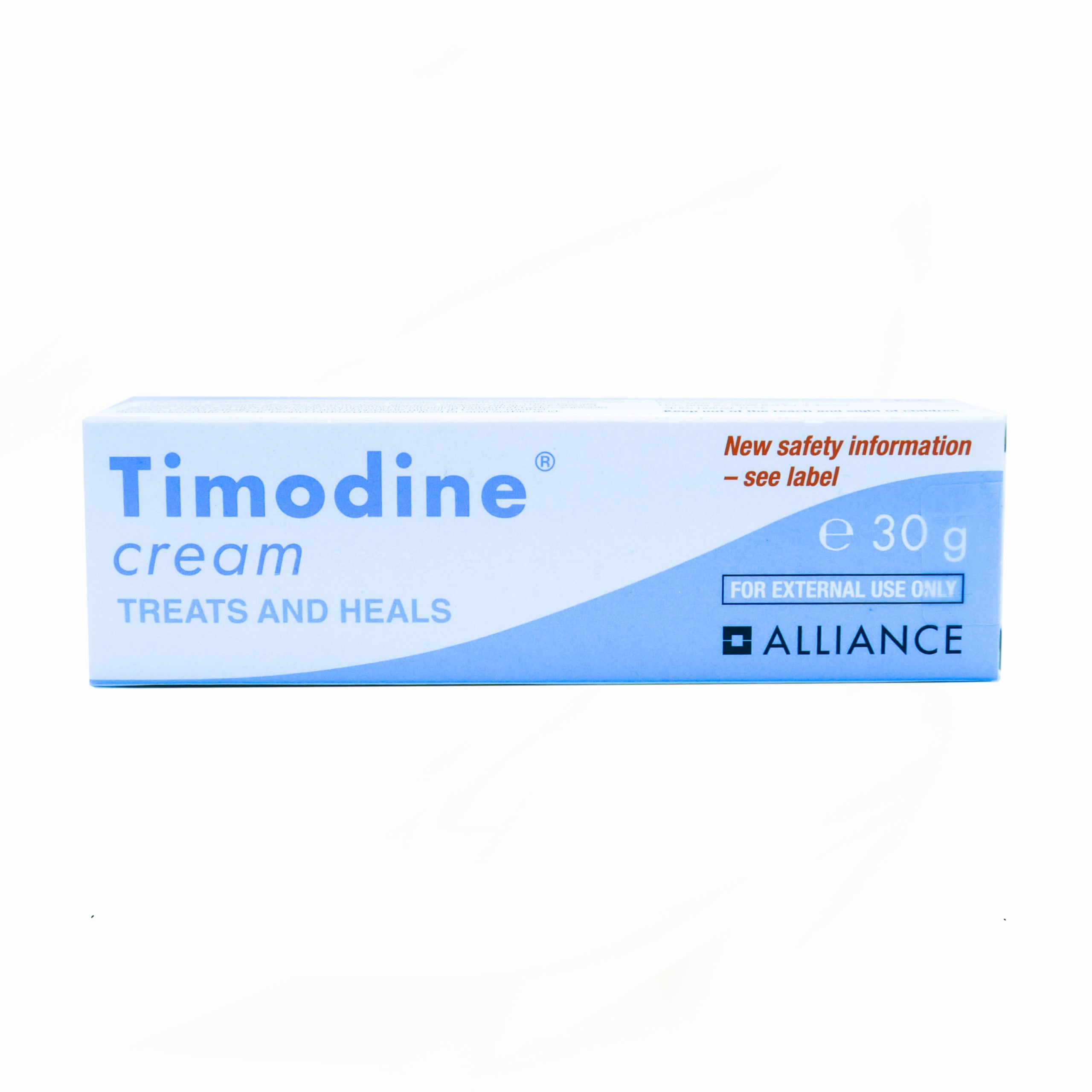
Timodine Cream

Fastest delivery:
Order by 3:00pm
-

Free delivery over £50.00
Fast, tracked delivery from £2.95. Arrives as quickly as the next working day in discreet packaging.
-

100% UK-based pharmacy
Our team of doctors and prescribers, and our support staff, are all UK-based.
-

Free support and advice
We're on hand to offer free support and advice by email and telephone (Mon - Fri 08:30 - 17:00).
-

We’re rated 4.9 out of 5
based on over 17,000 reviews collected on Google and Reviews.io.
Description
What Is Timodine Cream?
Timodine Cream is a combination antifungal and anti-inflammatory cream used to treat skin conditions where fungal infections cause irritation and inflammation. It is particularly effective in treating areas where the skin is inflamed and infected, such as with severe nappy rash, intertrigo (a rash that occurs between skin folds), and certain types of dermatitis. Timodine is composed of four active ingredients: Nystatin, an antifungal that kills Candida albicans; Hydrocortisone, a mild steroid that reduces inflammation; Dimeticone, which forms a protective barrier over the skin; and Benzalkonium Chloride, an antiseptic that prevents further infection.
Timodine Cream is typically used when there is both inflammation and a confirmed or suspected fungal infection present. It helps soothe sore, red and broken skin while treating the underlying infection and protecting the area as it heals. The cream is intended for short-term use and should be applied as directed by a healthcare professional to reduce the risk of side effects associated with steroid use.
How Does Timodine Cream Work?
Timodine cream works by killing the bacteria that cause infections. When applied to the skin, timeline cream works by blocking the action of certain enzymes that are necessary for the development of inflammation. It does this by interfering with the bacteria's ability to make proteins. This prevents the formation of inflammatory mediators, such as prostaglandins and leukotrienes, which are responsible for the redness, swelling, and pain that are characteristic of many skin conditions. This helps to prevent infections and promote healing.
In addition to reducing inflammation and infection, Timodine Cream also helps protect damaged skin while it heals. The antifungal ingredient targets Candida infections, while the antiseptic helps prevent secondary bacterial growth. Dimeticone forms a protective barrier over the skin, helping to lock in moisture and reduce further irritation from friction or moisture. Together, these actions help calm symptoms, support skin repair and reduce the risk of the condition returning when used as directed.
Warnings
- You must talk to your doctor first before using Timodine cream when pregnant or breastfeeding.
- Do not use Timodine if you or your child has a liver or kidney problem.
- Do not use Timodine cream without informing your doctor about any underlying medical or allergy conditions.
- Timodine is only meant for external use therefore it should not be ingested.
- Do not apply Timodine on wounded, bruised or open skin such as the eyes.
- Do not dress the cream or apply any plasters.
- You must stop using the cream when you notice any skin reactions on the site of application.
- Use the lowest effective amount for the shortest time necessary to relieve the condition, especially when used in children.
- Do not use Timodine Cream for long periods of time or on large areas of the body.
- Do not apply the cream to skin folds unless specifically advised by a healthcare professional.
- Speak to your doctor if signs of a bacterial or fungal infection appear or do not improve during treatment.
- Contact your doctor as soon as possible if you experience blurred vision or any changes in eyesight while using Timodine cream.
Directions
You must follow the instructions provided by your doctor, or read the information on the prescription label.
- Wash your hands before and after each application.
- Apply a thin layer of Timodine cream to the affected area 3-4 times a day and massage it in gently until the cream is fully absorbed.
- To treat a nappy rash, clean your baby's skin, before applying a thin layer of Timodine cream to the sore areas. Repeat the treatment after every nappy change.
- The cream should be used two to three times daily for seven days.
- If you forget your dose, take it as soon as you remember unless it is time for your next dose.
- Adults: Apply a thin layer to the affected area two to three times daily for up to seven days, unless advised otherwise by a doctor.
- Children and infants: Apply a thin layer to the affected area two to three times daily. Use the lowest effective amount and do not use for longer than seven days unless advised by a healthcare professional.
Ingredients
Timodine contains four active ingredients which are:
- Hydrocortisone
- Nystatin
- Dimethicone
- Benzalkonium chloride
Other ingredients include:
- Cetostearyl alcohol
- Sorbic acid
- Butylated hydroxyanisole
- Propylene glycol
These ingredients work together to reduce inflammation, treat fungal infections and protect the skin while it heals. Timodine contains ingredients that may cause skin irritation in some people, such as cetostearyl alcohol and propylene glycol. Always check the full ingredients list before use, especially if you have known sensitivities or allergies.
Side Effects
Side effects include:
- Hair loss
- Dry skin
- Thinning skin
- Maceration
- Itching and burning
- Acne
- Allergic skin reactions
- Erythema
- Folliculitis
The risk of side effects is increased if too much cream is used, if it is applied for longer than recommended, or if the treated area is covered with bandages or other occlusive dressings.
If you experience severe, persistent or unexpected side effects, stop using the cream and consult your doctor or another healthcare professional as soon as possible.
FAQs
1. How often should I apply Timodine Cream?
Timodine should typically be applied 2-3 times a day to the affected area, or as directed by your doctor.
2. Can I use Timodine on broken skin?
Timodine should be used with caution on broken skin. If in doubt, consult a healthcare provider before applying it to open or damaged skin.
3. Can I use Timodine for an extended period?
Prolonged use can cause side effects such as thinning of the skin, so it should not be used continuously for more than 7 days without consulting a doctor.
4. Is Timodine suitable for children?
Yes, Timodine is often used for conditions like severe nappy rash in infants and children, but use should be monitored by a healthcare professional.
5. What should I do if I experience side effects?
If you experience side effects such as a severe rash, irritation, swelling or difficulty breathing, stop using the cream immediately and seek medical help.
6. Can Timodine Cream be used on the face?
Timodine is not usually recommended for use on the face unless specifically advised by a doctor, as facial skin is more sensitive and more prone to side effects.
7. How quickly does Timodine Cream work?
Some improvement in symptoms may be noticed within a few days. If your symptoms do not improve or worsen after seven days, consult a healthcare professional.
8. What should I avoid when using Timodine Cream?
Avoid applying the cream to large areas of the body, covering the treated area with dressings, or using it for longer than recommended. Do not apply near the eyes or mouth.
9. Can I use Timodine with other skin treatments?
You should speak to a doctor before using Timodine alongside other topical treatments to avoid potential irritation or interactions.
10. What should I do if my symptoms return after treatment?
If your symptoms return after completing treatment, do not restart the cream without medical advice. Speak to your doctor for further guidance.
